
The Forest
Updated: Mar 17
About The Forest Project
Co-led by Emily Boles and Rudi Ruddell, the core of the Forest Project is that the Land, Plants and Animals be cared for in a good way that honors and maintains Abenaki traditions. What is best for the land must always come first.
Indigenous knowledge is combined with current management and conservation practices to create a balanced form of land care that promotes culturally and ecologically important principles.
The Abenaki understanding of land and all of its inhabitants helps foster a reciprocal relationship with ecosystems that can heal past degradation and provide future stability for communities, both Human and Wildlife.
We do this by listening to the Land, moving slowly with careful intention, and rebuilding relationships that supersedes commodification.

The first step towards this was getting to know the land itself better, before making any decisions that could impact the ecology there. What we learned from extensive field work in the years since 2022 is that this land is home to distinct natural communities and a number of rare/threatened species.
Through a series of forest events including nature walks and volunteer work days we have been introducing people to the forest and providing education on how they can interact with nature in a way that reduces any negative impacts on land and wildlife, while building a connection to place. Our hope is that by providing guidance, more people will become good stewards of the land and learn to live in balance with nature.
The Land at a Glimpse
There are 12 distinct community types identified, 5 of which are considered ecologically significant, such as the Sugar Maple-Hop Hornbeam forest with a sedge understory, and the Erosional bluff over the first branch of the White River.
Four rare and six uncommon plants have been found including two types of orchids, and sedges.
135 plant species have been inventoried so far although this is likely only ⅓ or less of the actual number of plants present.
One rare animal, the Jefferson salamander, has a documented breeding population around the vernal pool.
Some of the birds and animals are species that require interior forest habitat.
The intact, mature Hemlock forest is part of a larger tract that provides important deer wintering habitat and wildlife corridors.
The ridge line creates variation in the land’s topography, providing different features such as ledges that support a variety of plants, increasing biodiversity.
Water is plentiful with springs, groundwater, a vernal pool, a rich fen (similar to a bog), and Belknap Brook all creating a variety of wetland habitats.
Our Work

Planting a Riparian Buffer
One of the first tasks of the forest project was to gather a group of volunteers to plant a buffer of shrubs along a curve in the bank of Belknap Brook to help limit erosion, and slow floodwaters that would continually wash out the road next to the brook.

Vernal Pool Monitoring
A vernal pool is a temporary pool of water that forms in the spring and provides important breeding habitat for amphibians and other semiaquatic forest species. A high quality vernal pool is present in the forest and supports populations of wood frogs, several types of salamanders, caddisfly larvae, fingernail clams and even fairy shrimp. (Fairy shrimp are small crustaceans that are completely dependent on vernal pools for their life cycle.) We partnered with VT Center for Ecostudies’ “Vermont Vernal Pool Monitoring Project”, and each year we collect information such as acoustic and water level data, egg mass counts for frogs and salamanders, and the abundance of invertebrates, all of which is used to help paint the picture of VT’s vernal pools.
Mountain Mint Population Monitoring
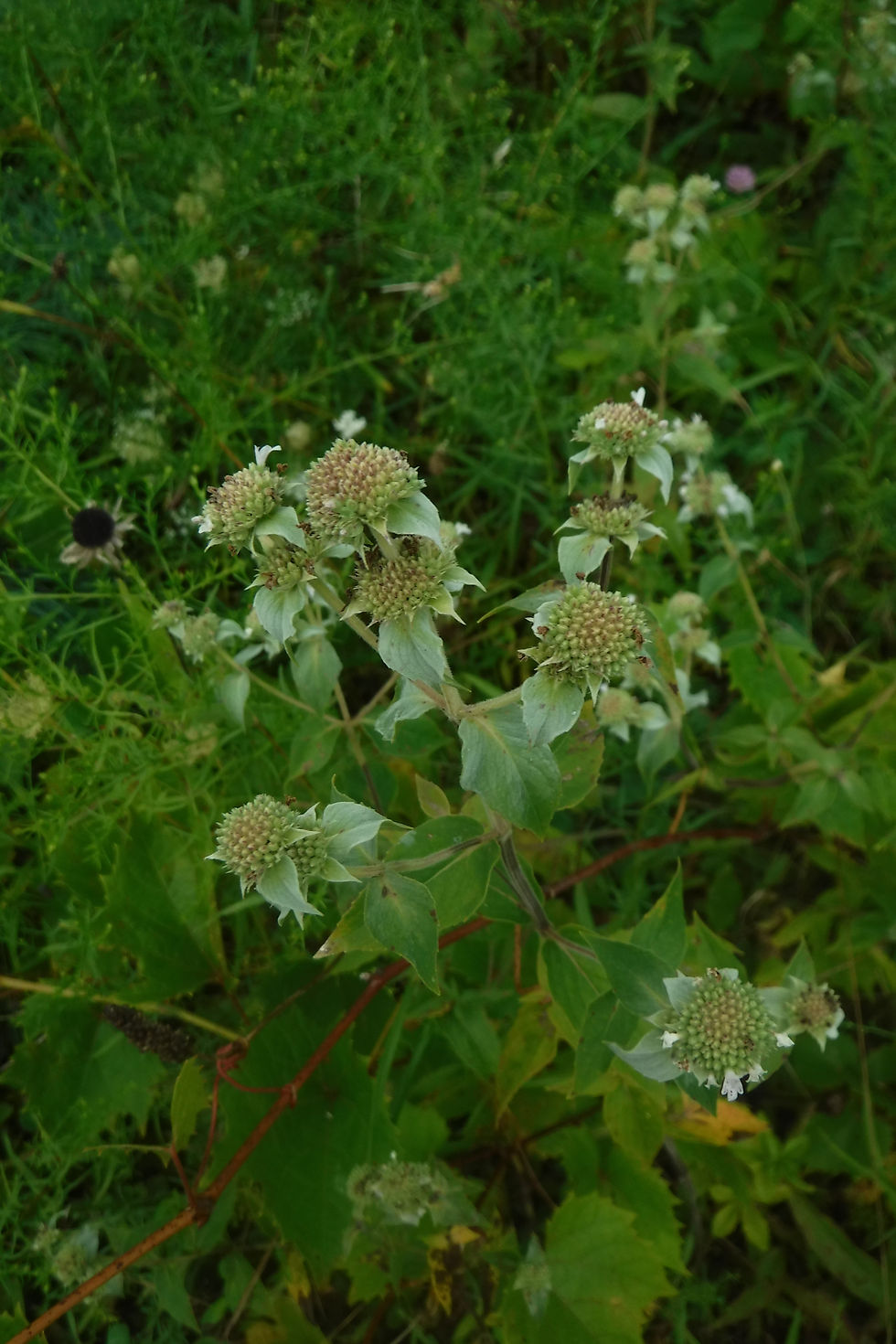
There is a significant population of Blunt Mountain Mint (Pycnanthemum muticum), which is a very rare plant species in VT. We have established permanent ground plots in which the populations of the mint are counted annually. By collecting this data, we will be able to distinguish population trends over the years, determine causes of any changes in the population, and make appropriate management decisions in order to best care for this rare species. Little is known about how this mint species became established here, and if it will be able to remain, making this primary research all the more important during a changing climate.

Invasive Species Management
Like most forests, this one has its share of non-native species. Some are naturalised and benign, while others are more aggressive and require intervention. This is especially true in the area that was clear cut before the White River Land Collaborative began caring for the land. Helping this area of the forest heal and recover is an important piece of the forest project and our goal of giving back to the land. During work days we rely on volunteers to help remove problematic plants by hand with tools, which allows us to avoid using herbicides that could cause more harm to the land. We teach our volunteers how to identify invasive species and to remove them in a respectful way, as per Abenaki principles no plant should be labeled as solely “bad”. The aim is not a war against any species, but to restore balance in the ecosystem

Innovating Conservation for Indigenous Practices
Our team has been engaging in profound conversations around conservation and working to expand what conservation means and should address in terms of Indigenous inclusion and traditional land care practices. A growing awareness has been developing in conservation organizations about the current limitations of conventional conservation. We have been collaborating with some of these organizations to discuss the challenges and support innovation.

Creating Educational Opportunities
Education is an important component of the Forest Project, both for us learning about the land hands-on and for sharing what has been learned with the wider community. In addition to our public forest walks, we collaborate with local teachers to give children and teenagers the opportunity to experience the wonder and knowledge nature provides.